
The 30/30/30/10 Rule. How Smart Franchisees Use Their Time Correctly
Mar 04, 2026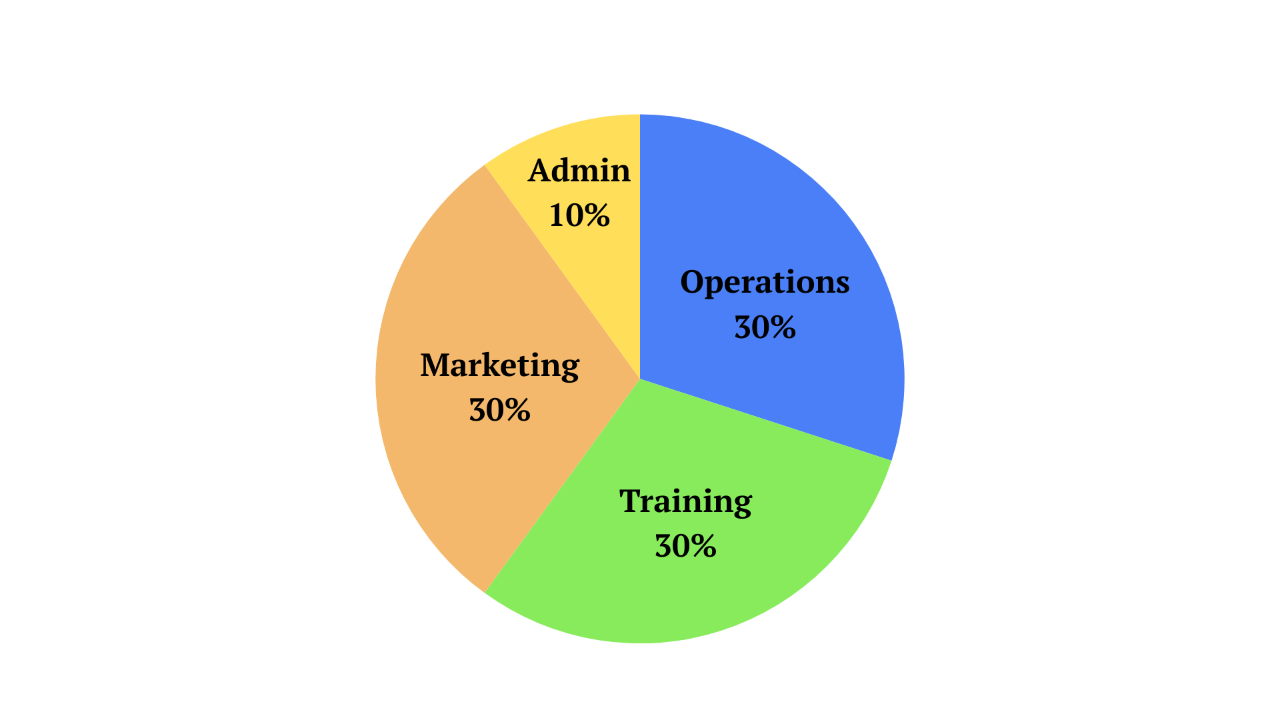
If you are a franchisor or franchisee, you already know that your stores do not fail because you overlooked something on your menu. They fail because your managers spend their time doing the wrong things at the wrong times.
Most franchise brands I see have talented people and strong concepts, but their managers spend too much time as fire-fighters, putting out fires and dealing with crisis after crisis until they close their doors at night. Running to the supermarket to buy products they forgot to order on time, leaving their locations during crucial peaks, filling in for absent staff, and doing late‑night paperwork. Training and smart management never happens, because they are in “crisis mode” most of the time.
This is exactly why I created the simple 30/30/30/10 time‑management rule for franchisors and franchisees.
What is the 30/30/30/10 rule?
The 30/30/30/10 rule is a practical time‑allocation model that tells every manager exactly where their working hours should go in a healthy, growing store:
- 30% Operations – working in the store, quality control, customer service, hygiene on the floor.
- 30% Training – recruiting, onboarding, coaching, checklists, correcting mistakes, reinforcing standards.
- 30% Marketing – local store marketing, community presence, promotions, social media, customer acquisition.
- 10% Admin – paperwork, reports, schedules, messages, basic communication with HQ.
When managers follow this simple split, stores tend to grow in a “balanced” way: standards stay high, new customers keep arriving, and the team becomes more independent over time instead of more dependent on the manager. When they do not, three things usually happen: quality drops, sales stagnate, and the manager burns out.
Why most franchise managers are out of balance
In many of the franchised chains I have worked with, managers’ actual time split looks more like this:
- 65% operations
- 25% admin
- 5% training
- 5% marketing
It feels productive because they are always “busy”, and find themselves living in the business to keep it from going off track, but working hard doesn’t mean “working smart”.
- With little or no training systems in place, every shift has its own “version” of standards, and quality control becomes impossible.
- With little or no marketing, sales depend on luck, passing traffic, or third‑party platforms, instead of proactive local activity.
- With too much admin, managers become office clerks instead of leaders on the floor.
As a franchisor, you then feel guilty and frustrated: your franchisees blame the brand, but in reality nobody has shown their franchisees or store managers how to use their time like a business leader, and not like a firefighter.
Let's break it down
30% Operations:
Operations is where standards live: guest experience, food safety, speed of service, cleanliness. You want your manager to be visible on the floor - but with a purpose and only during the times when they are most needed, like during the peak hours.
- Spending time engaging with customers, getting feedback, opinions and ideas from your customers.
- Spending time shoulder to shoulder with your staff members, leading by example.
- Learn firsthand where improvements can be made.
- Understanding any challenges your staff are having and where operational improvements can be made.
If operations go below 30%, standards slide. If they go far above 30-40%, your manager is probably “covering shifts” instead of leading, and the other three areas disappear.
30% Training:
Overall operations and standards go out the window when training is not taken seriously. Training should be done strategically, in an organized way, ongoing and which never stops.
In that 30% training block, managers should be:
- Recruiting and onboarding new staff in a structured way.
- Running short, daily or weekly training sessions.
- Using checklists and written standards to ensure all training aspects should be thoroughly covered, tested and double checked, not just verbal instructions carried out during service and on the fly.
When training gets its full 30%, you see fewer mistakes, lower turnover, and managers who can finally delegate without fear.
30% Marketing:
Many franchisees think “marketing is the franchisor’s job.” That is only half true. Headquarters can manage brand campaigns, but each store must do its own local marketing.
In this 30% block, managers and franchisees should focus on:
- Local partnerships, nearby offices, schools, gyms.
- Simple, consistent local promotions and events.
- Basic store‑level social media and reputation management.
- Old fashioned “Street fighting tactics” like fliers and using advertising boards.
When this slice is missing, stores rely only on brand power and random foot traffic, which is why two locations in the same chain can have completely different sales.
10% Administration
Admin is necessary but must never become the “main job.”
Limit this to the essentials:
- Weekly P&L inputs and KPI reports.
- Scheduling, payroll info, basic communication.
- Checking that numbers are correct, not over‑analyzing for hours.
If your manager spends half their time on spreadsheets, something is wrong in your systems. Admin should support decisions, not replace them. Either an hour a day or one day in the week. I prefer one hour a day and half a day during the week for stock taking and completing the weekly P&L report. If the admin side of the business is set up correctly, you should not need more time than this.
Why is this so important for franchisors?
When your franchisees and franchisors manage their time in a disciplined, predictable way, three big things happen:
- You gain control and visibility - you know what is happening in every location.
- You protect your brand - standards and guest experience become repeatable instead of random.
- You unlock scalability - you can open more units without destroying quality or burning out your best people.
Franchising is not just selling your logo and concept. It is teaching people how to run a profitable business based on your method, and that starts with how they use their hours every single day.
Your Next Smart Step
If you found this blog or article helpful and you’re ready to go deeper or want to get more LIVE information for free, your next step is to join my free live workshop.
In about 90 minutes, I’ll walk you through practical frameworks and tools you can apply immediately in your own franchise.
You’ll get:
- Clear, step‑by‑step guidance in my "5 Steps To Franchise Profit Growth"
- Real examples and live Q&A
- Practical tools you can start using immediately
If this is the kind of support you want on your growth journey, you can register here:
Click here (Franchisee or Franchisor) to register
🎁 REGISTER NOW & GET 2 FREE BONUSES
Spots are limited, so reserve your seat now.
You are also welcome to contact me directly on [email protected] or visit me at franed.com
Join Our Next Free Workshop
"3 Steps to Franchise Profit Growth"
Why does my Profit and Loss report show a profit, yet I am constantly short of cash when it’s time to pay salaries?
To register click one of the below:
FRANCHISEE / FRANCHISOR
Who writes this blog